Portfolio Case Study

Red
Points

Red Points is a startup that protect 1.300+ global brands from counterfeits, fake websites and pirated content using IA. Two years shaping UX strategy and research for a fast-moving B2B SaaS product, working closely with Product and Engineering.

B2B SaaS Design Strategy UX & UI Research Team Lead
RoleSenior UX Designer → Design Team Lead
PeriodDecember 2020 — December 2022
Team1 → 4 designers
ScopeDesktop · Design System · Research
CollaboratorsProduct · Engineering · Legal · Business · CSM · Marketing
Starting point

A product that worked. A design process that didn't.

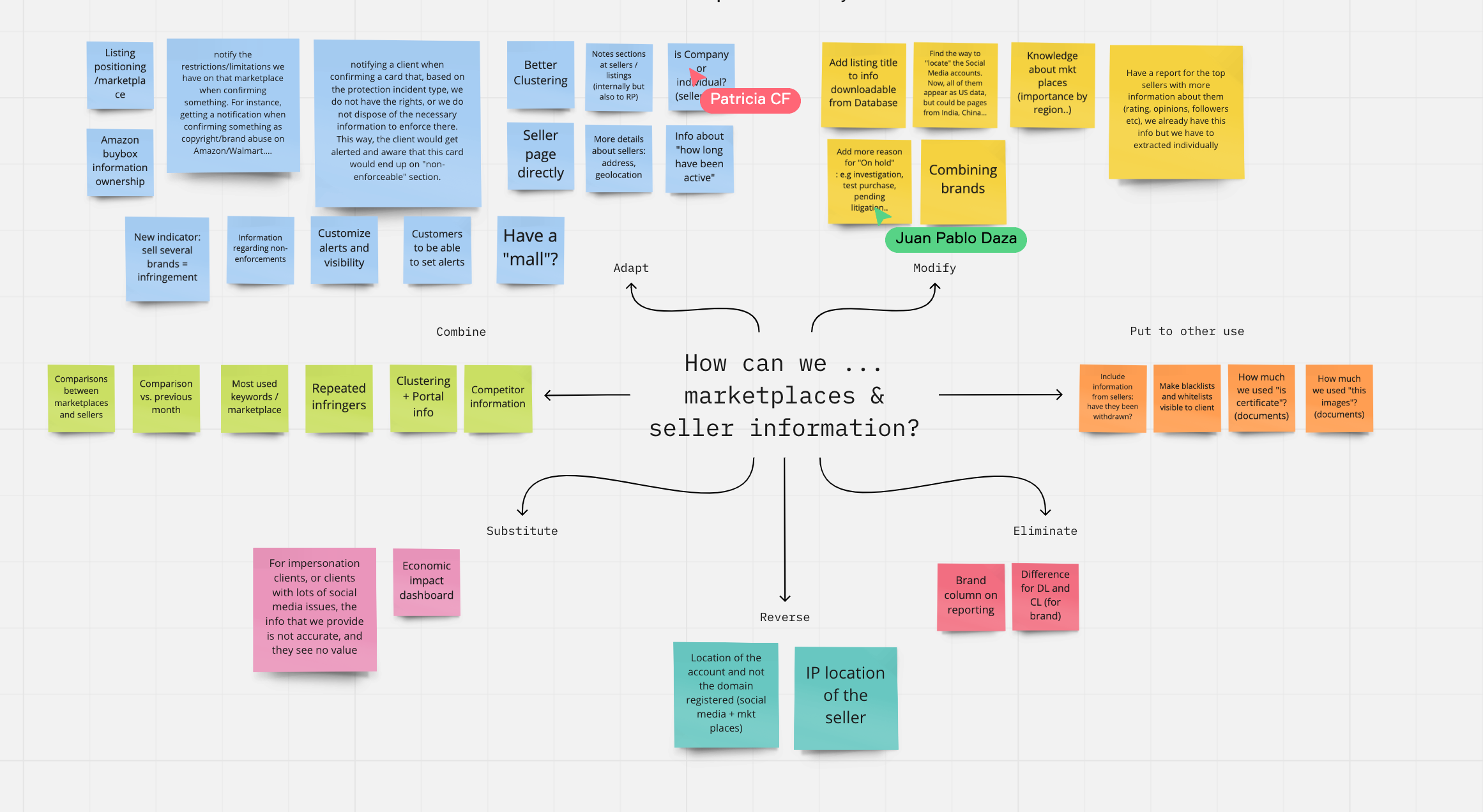
The technology was already working well, and the need was obvious: thousands of infringements were being detected every day. But the platform had grown faster than the team's ability to design it consistently. No research practice, no design system, and every new feature was a bet on what customers wanted rather than an answer to a confirmed problem.

When I joined, the design team was 1 person responding all requests. Multiple stakeholders were pulling in different directions: product, business, IT and marketing each with their own priorities, and no shared framework to reconcile them. The result was a platform that had grown without coherence.

Key problems

No UX foundation: no heuristic baseline, no usability testing, no analytics. Decisions based on opinion, not behavior

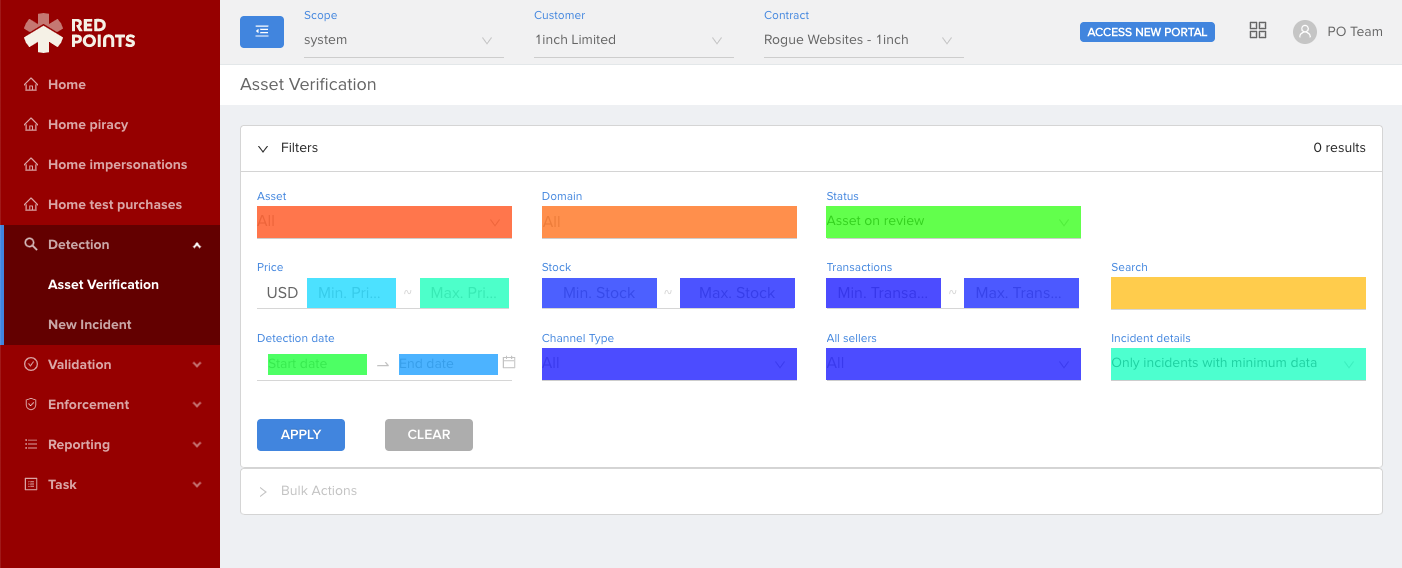
Inconsistent platform: complex B2B workflows without shared patterns or a design system to hold them together

Misaligned priorities: business requests, product roadmap and user needs were rarely in sync

Design as execution: called in to deliver, not to discover or validate. Every feature shipped was a bet
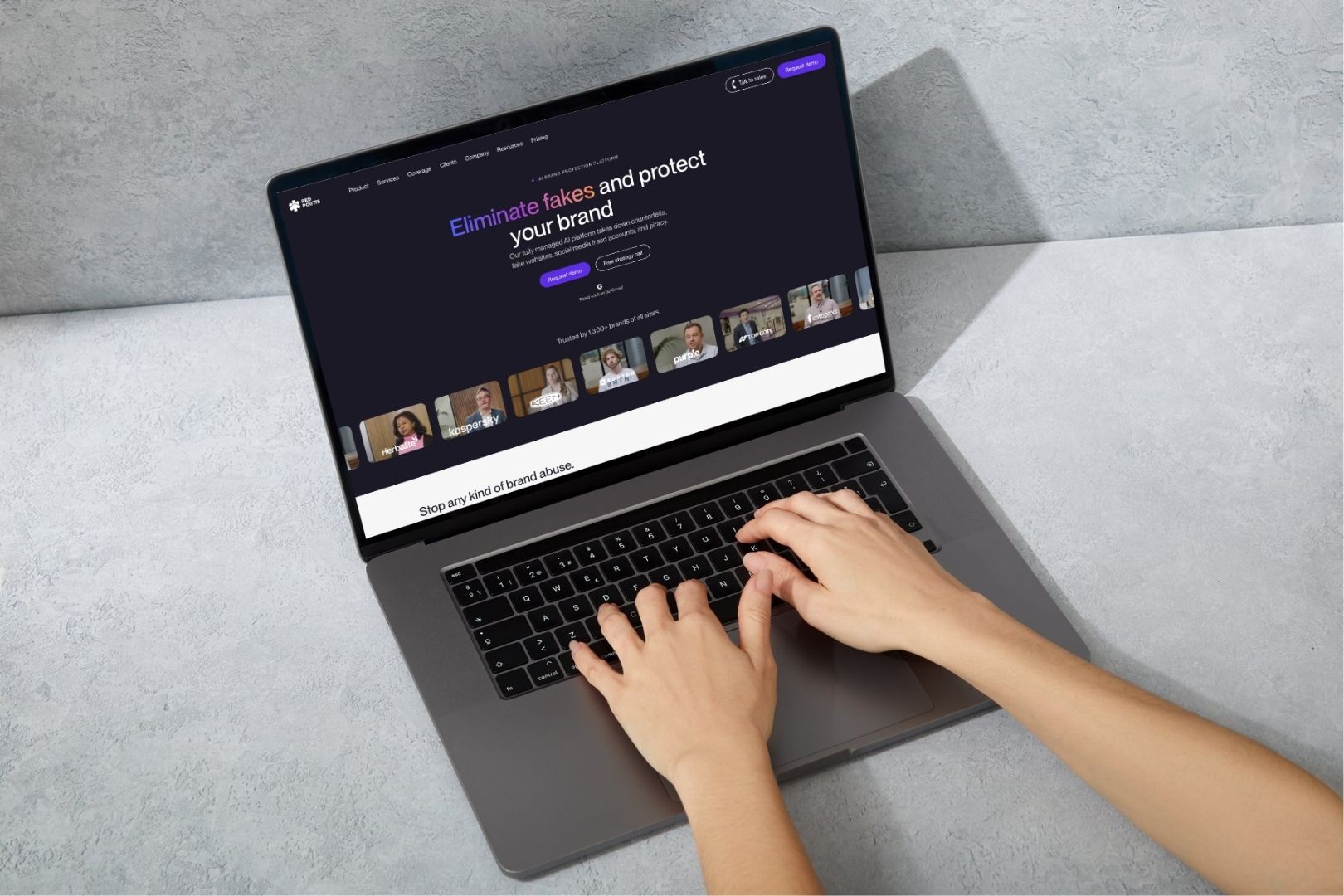
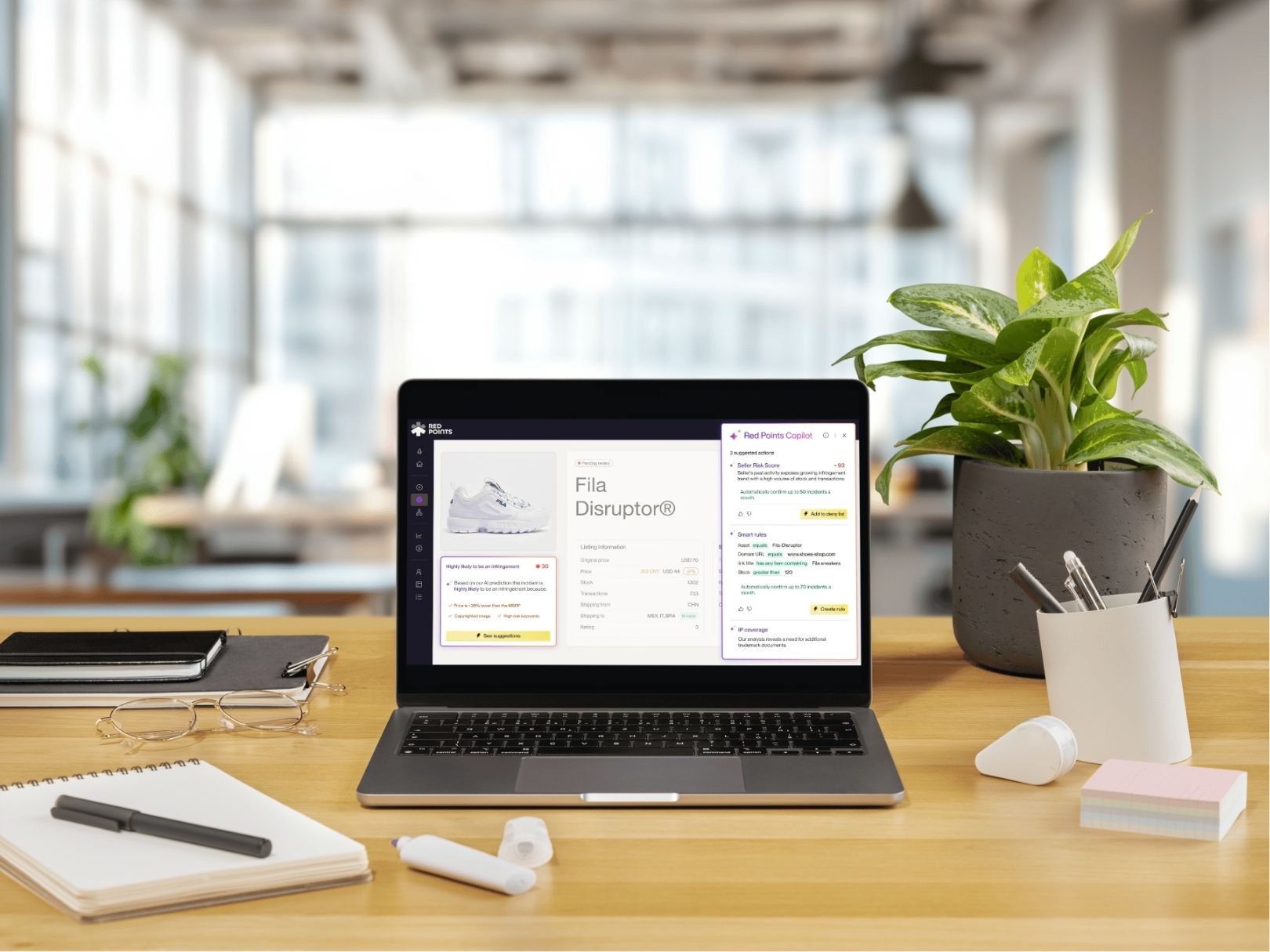
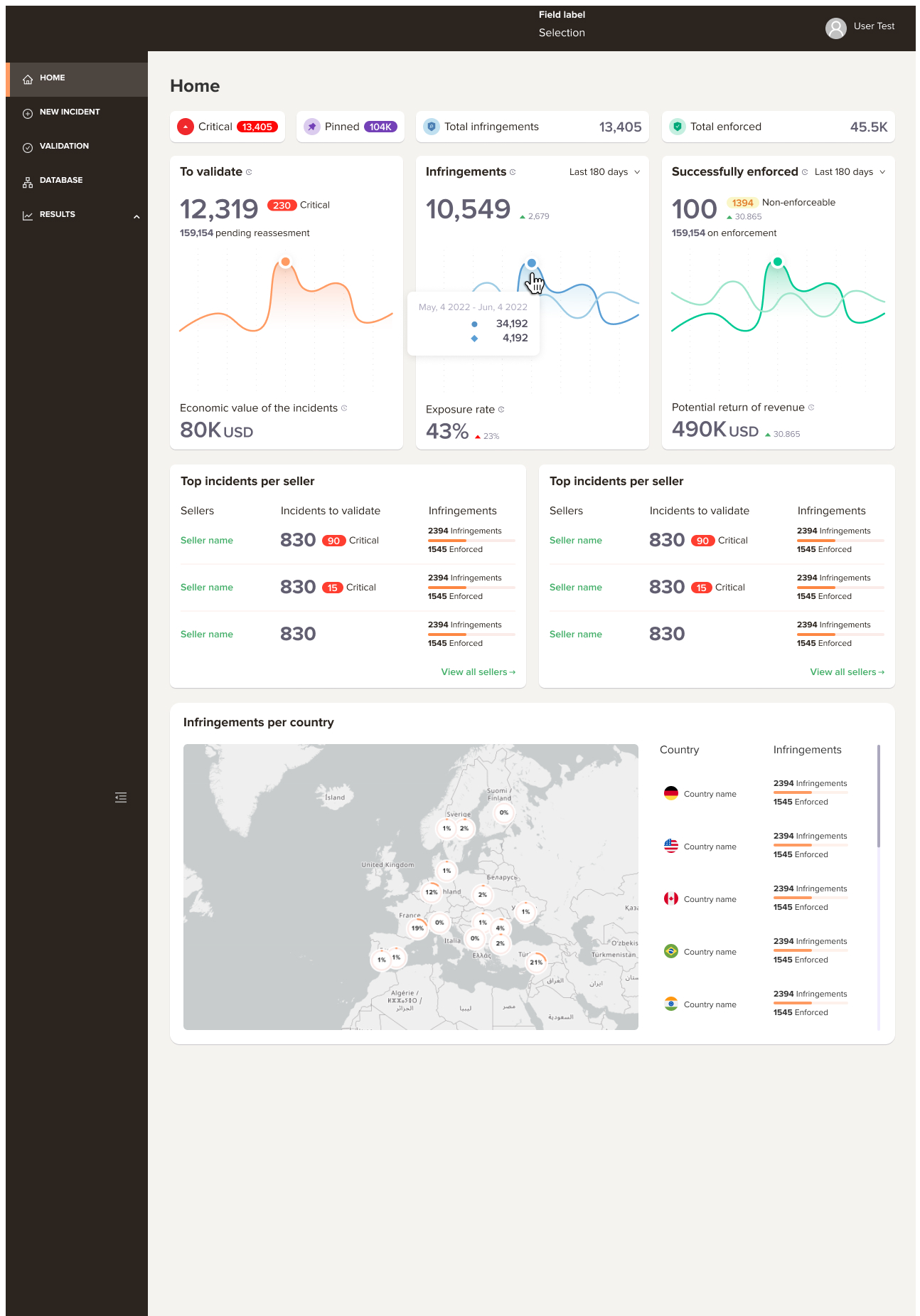
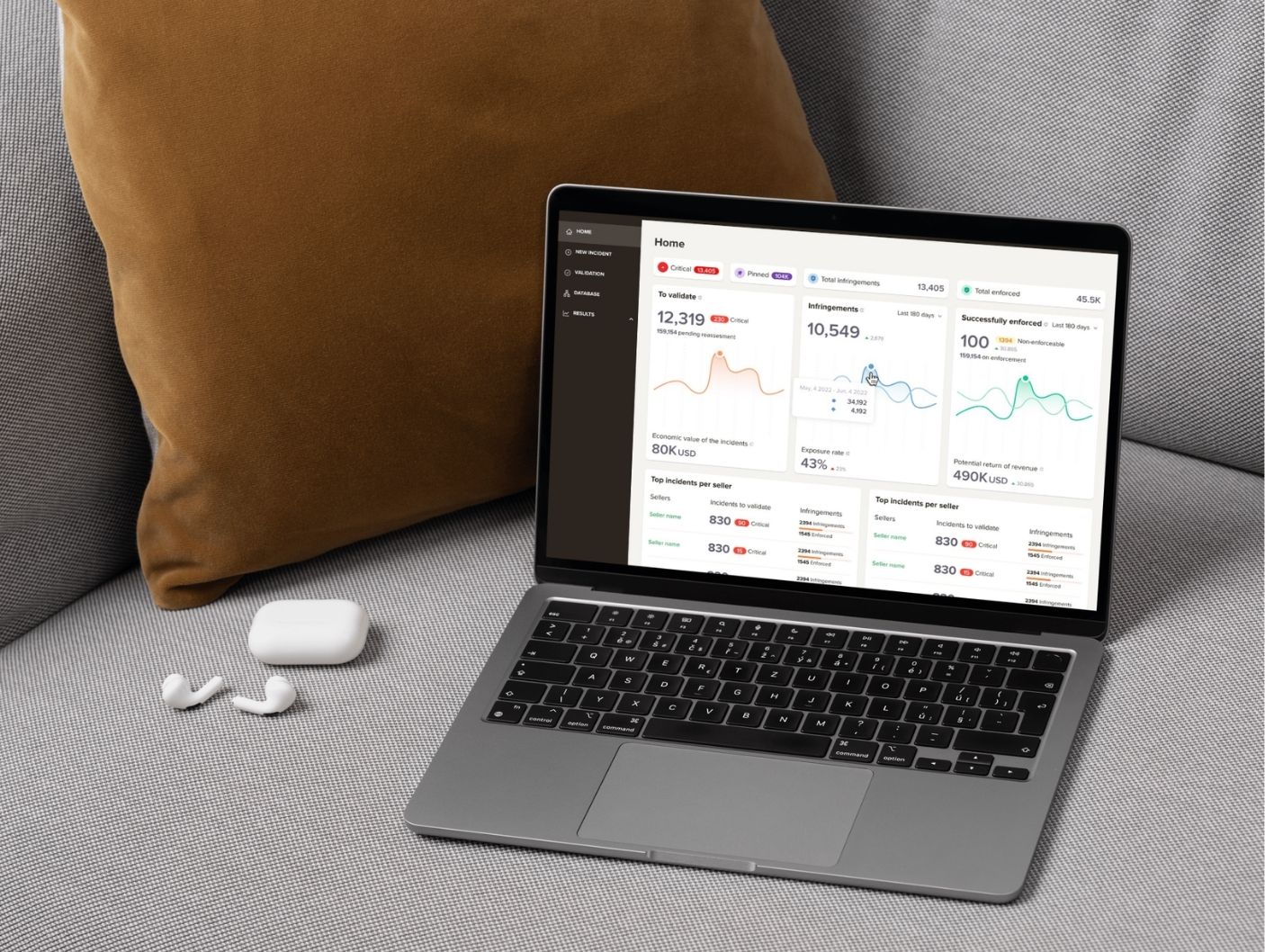
Red Points platform

Red Points, AI-powered brand protection platform
How we worked

Research first, then build. Every time.

I introduced some practices that didn't exist when I arrived. By the time I left, all three were standard across the product team.

01 2021
Understand first
Heuristics and customer research

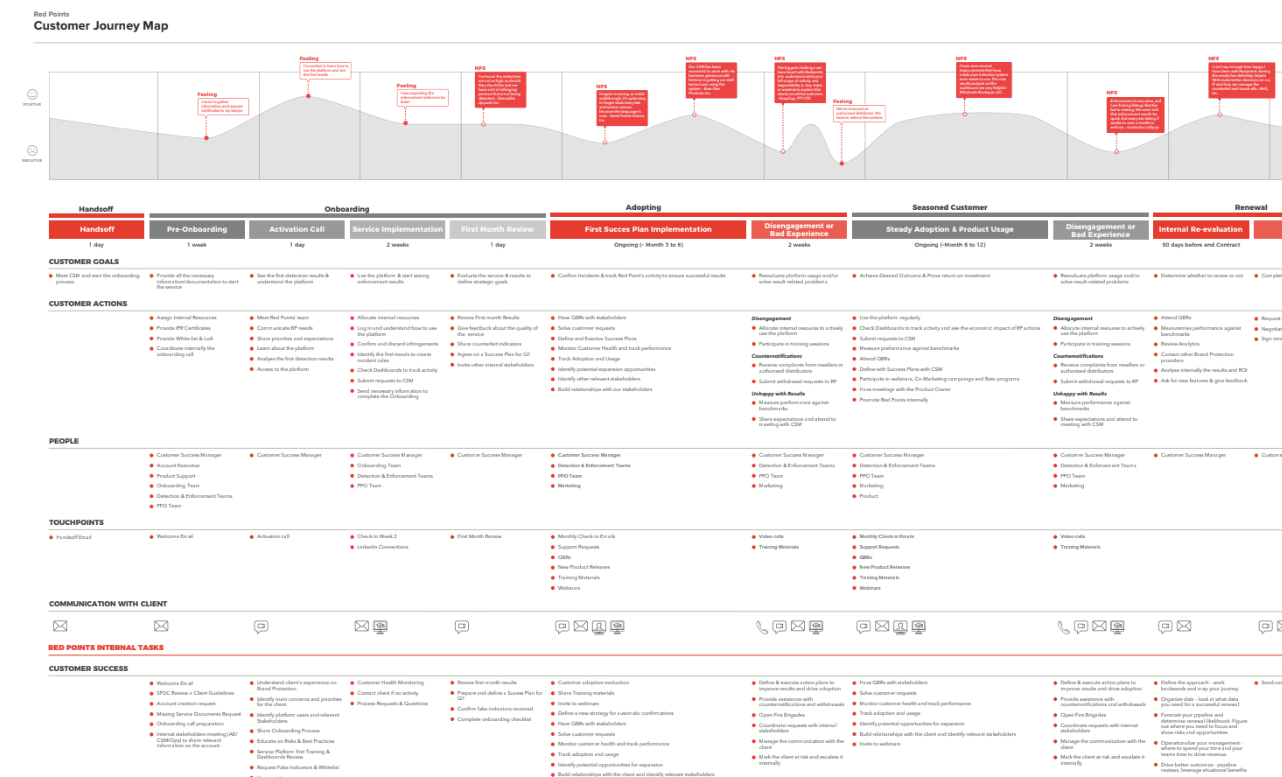
Full UX heuristic evaluation of every module, severity-mapped. Then usability testing with real customers: the first structured sessions the company had ever run. That gave us a prioritized backlog nobody could argue with.

Outcome
Evidence-based backlog
first time design had data to back every priority
Qualitative dataUsability testing
02 2021–22
Instrument everything
Full product tracking

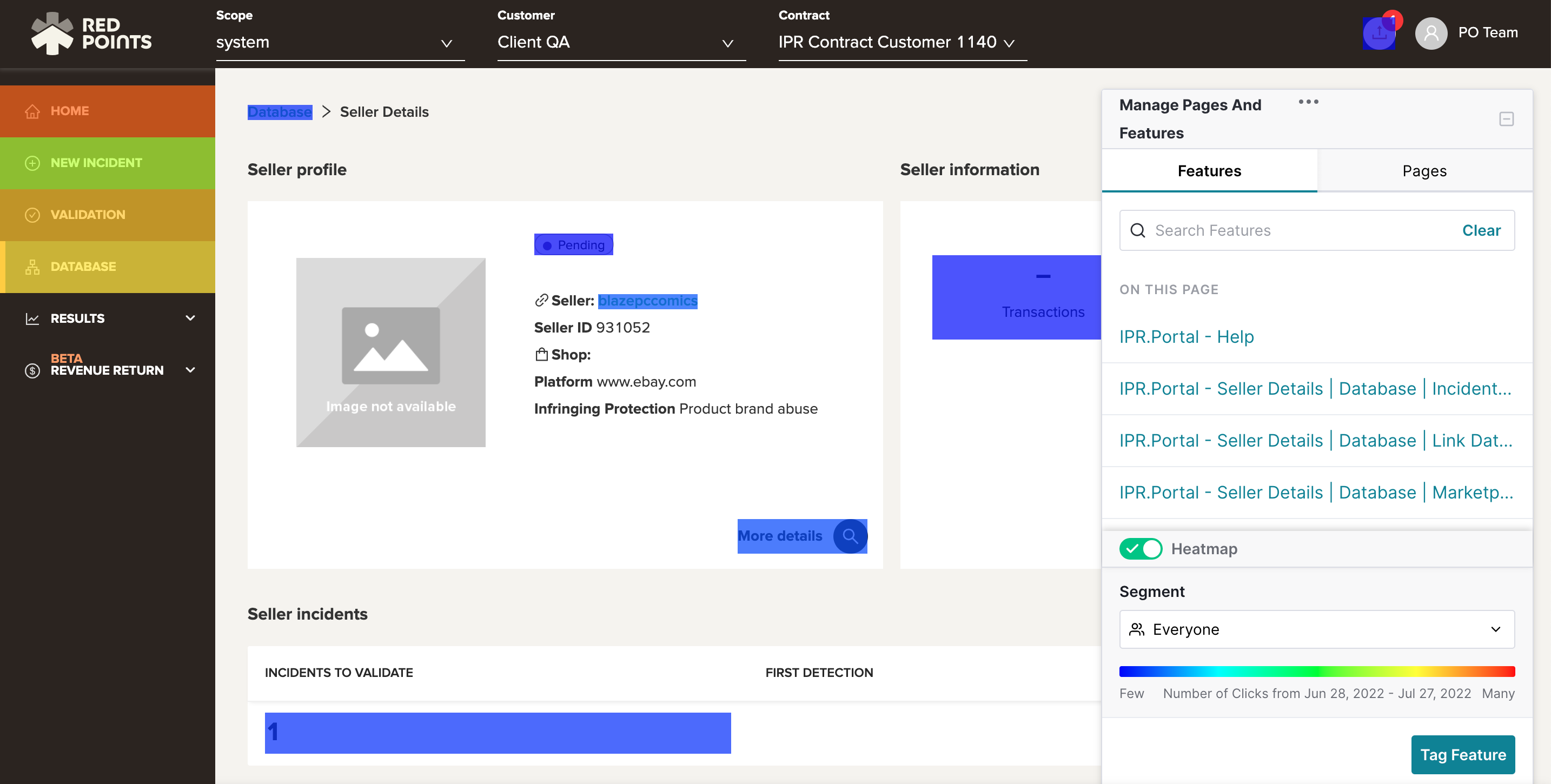
Implemented Pendo across the entire platform: every screen, flow and feature tracked. For the first time, we had behavioral data to show how customers actually moved through the product. That changed every conversation about priorities.

Outcome
100% of the product covered
behavioral baseline across every screen
Quantitave dataBehavioral patterns
03 2022
Validate before building
Discovery as a gate

New features needed a validated problem definition before entering the sprint. We didn't always get it perfect, but asking “do we know this is a real problem?” changed what got built and how confident we were when it shipped. We complemented this with RICE prioritization, helping Product team balance validated user needs with impact, reach, confidence, and effort.

Outcome
20+ features shipped
all validated before engineering started
DiscoveryAgile
Solution

What matters is the value each feature brings to the user.

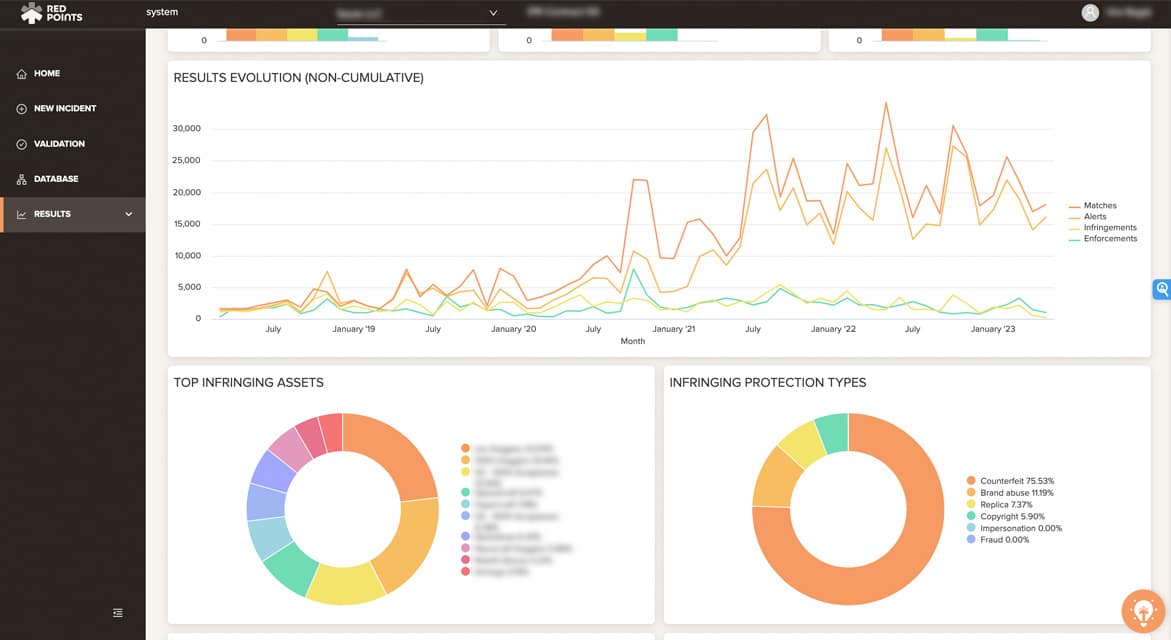
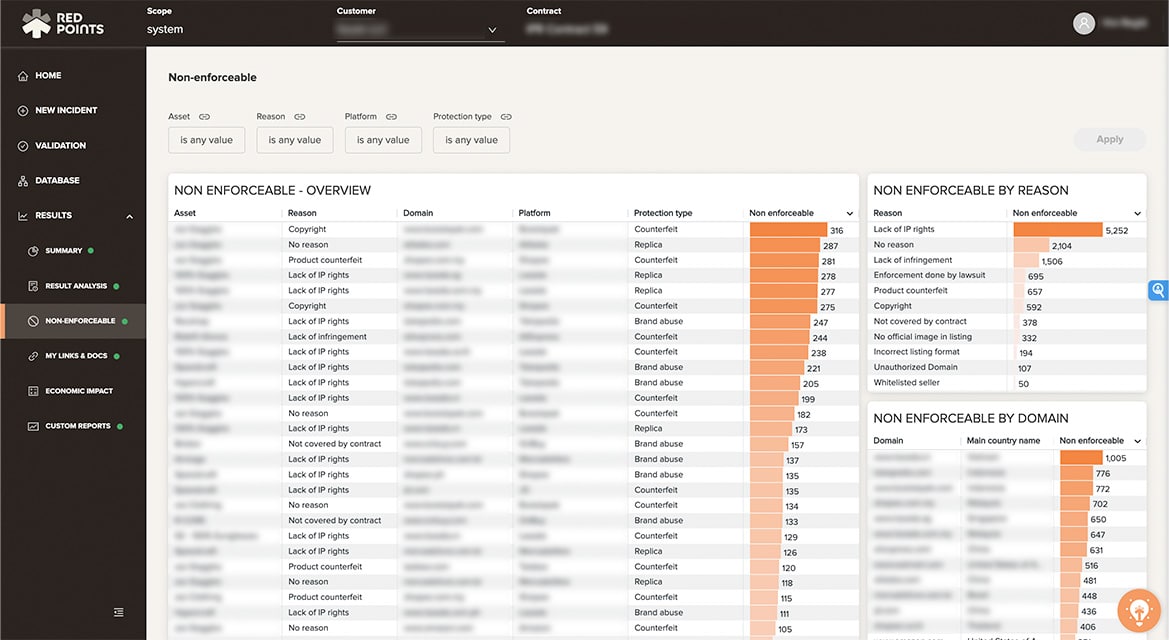
Some of the most impactful work wasn't new features at all. It was restructuring what already existed: navigation rebuilt around data, reporting redesigned from dense tables to visual summaries that brand managers could read without calling customer success.

Key improvements

Navigation restructured: module grouping rebuilt around how customers actually move through cases, not how we assumed they did

Bulk enforcement actions: most requested feature, validated with 6 customers before a single screen was designed

Reporting overhauled: dense data tables replaced with visual summaries, less dependency on customer success for basic insights

Evidence module: workflow for collecting and exporting IP violation evidence for legal proceedings, designed with the legal team

Platform improvements

Redesigned platform, post-research and post-rebrand

What I took away

What leading design in a B2B product actually taught me.

Data as step one. Having quali and quanti data before making any design changes transformed every conversation. It moved the argument from "I think" to "here's what we see..." That shift is cultural, not just technical, and it's the most durable thing I left behind.

Discovery as a gate, not a phase. Making "do we have a validated problem?" a requirement before engineering start changed what got built. Not fewer features, but better-aimed ones. Less rework. More confidence at launch.

Structures need to evolve with the business. Startups change fast, so the system needs enough structure to create consistency without becoming a constraint. We learned to treat the Design System as a living product, continuously adapting its patterns and components as the product, teams, and business evolved.

Next project

Cupra
A strategic business tool covering 10 markets

View case study